

The blog of In My Footsteps Podcast host and author Christopher Setterlund. It contains a buffet of topics. The wackiness of daily life with Initial Impressions 2.0. There is a link to the weekly In My Footsteps Podcast. Poetry collections, life topics, some history, and more. There is something for everyone here much like with the podcast.
Showing posts with label marconi. Show all posts
Showing posts with label marconi. Show all posts
Sunday, May 14, 2023

Friday, May 12, 2023
In Their Footsteps: Cape Cod Summer Vacation 1923
You’ve finally made it. After a long
cold winter, the warm weather has arrived. It is time for a trip to
Cape Cod for a summer vacation. You pack up the car and the kids and
head for the Cape but this is not 2023. No, you are heading for a
vacation on Cape Cod in 1923, one hundred years ago. What did a trip
to the Cape look like back then? Let’s find out.
First and
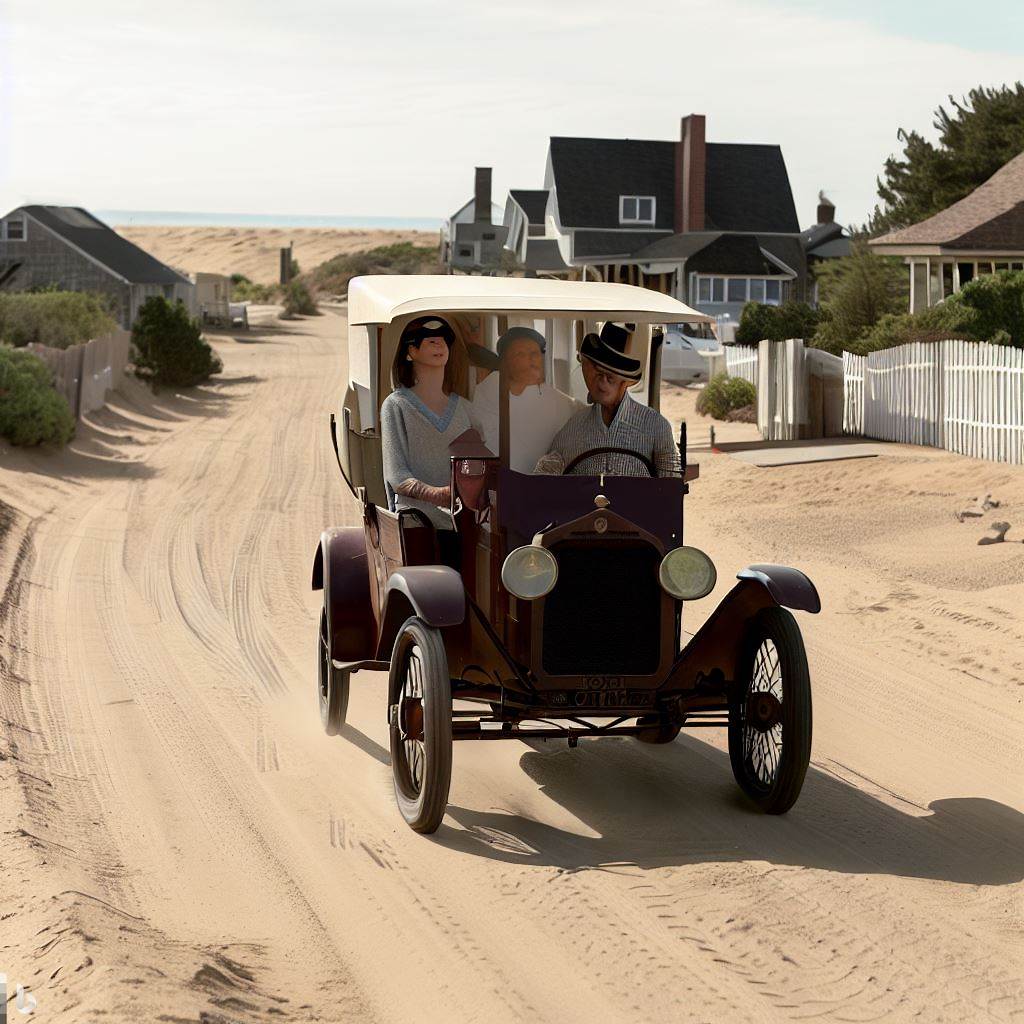
foremost do you have your own vehicle or do you take a train? If you
have an automobile you are one of the lucky ones. It would take until
1930 for more than half of American families to own automobiles. If
you had a vehicle it was most likely the Ford Model T as 1923 was its
best year for sales with more than two million units produced in that
year alone. Other popular vehicles included the Chevrolet Superior
and the Dodge Brothers Touring Car. These cars were quite different
from the vehicles of today, with their exposed engines and spartan
interiors.
 |
As you approach the Cape Cod Canal it looks
different. The canal, which by 1923 had only been in operation for
nine years, was still at its original width of 100 feet. It would not
reach its present-day width of 480 feet until 1940.
Naturally,
with a narrower canal, the three bridges that crossed it were also
different. The Sagamore and Bourne Bridges were drawbridges in 1923.
Both bridges consisted of two 80-foot cantilever sections that rose
to allow vessels to pass through. The railroad bridge was a 160-foot
cantilever bridge that pivoted upward on its north foundation. These
three bridges remained in use until 1935 when all three were replaced
with the current bridges.
You have now made it onto Cape Cod.
There are fifteen towns and 143 unique villages. A major difference
you will notice after crossing a bridge is that there is no Mid-Cape
Highway. It won’t be until 1950 that the highway opens from the
Sagamore Bridge to West Barnstable. This was Exit 6, present-day Exit
68. It is a slower go of things getting around on the Cape in 1923.
Luckily Route 6A, then known only as the Old King’s Highway,
existed to bring people all the way out to Provincetown.
The
big question now is where are you going to stay during your summer
vacation? One thing Cape Cod did not lack in 1923 was popular resorts
and hotels. In fact, the world-famous Chatham Bars Inn existed back
then, although on a far smaller scale. If you couldn’t find room at
CBI there was no need to despair.

Some of the iconic hotels
that you could have stayed at in 1923 included Aberdeen Hall on Great
Island in West Yarmouth, Terrace Gables in Falmouth Heights,
Chequesset Inn in Wellfleet, The Pines in Cotuit, and Hotel Belmont
in Harwich. It was common in those days to vacation in the same place
for weeks or even the entire summer. Hopefully, you enjoy your
surroundings.
If you were lucky enough to stay at one of these
fine hotels perhaps your room would have the hot new technology known
as a radio in it. Although there were no broadcast radio stations yet
on Cape Cod the medium would explode in popularity over the rest of
the 1920s. The majority of what would be heard in 1923 would be from
tiny amateur stations that would broadcast at random hours.
So
you have found a place to stay. What next? It’s probably a good
idea to find somewhere to get a bite to eat. Don’t go looking for
franchises like McDonald’s, Wendy’s, or KFC though. Franchises as
a concept don’t even exist yet. The first restaurant franchise was
a Howard Johnson’s which opened in Orleans, Massachusetts in 1935.
Not to worry though, there were plenty of great places to eat on Cape
Cod in 1923.
Driving around Cape Cod you will find an abundance
of tearooms. These were Victorian-era establishments that functioned
as small restaurants that served light meals, snacks, and of course
tea. Some of the popular tearooms in 1923 included the Whippoorwill
in Bourne, the Chatham Tea Room, and the Grey Gull in Falmouth. The
Grey Gull would go on to become an infamous speakeasy during the
waning days of Prohibition as The Hangar tearoom.
Of course, if
you were looking for some names familiar to longtime Cape Codders
there were a few. You could grab a bite at the East Bay Lodge in
Osterville, the Old Yarmouth Inn (then known as the Yarmouth Tavern),
or the Daniel Webster Inn in Sandwich.
If you were looking to
make yourself a home-cooked meal, or just grab some necessities, it
might have been easier to go to the market or drug store. Megathlin’s
in Hyannis was the tops as far as drug stores went. There were no
supermarkets to speak of in 1923. You could venture out to the local
Atlantic & Pacific Tea Co. (A&P), with locations in Falmouth,
Provincetown, and Dennis Port among others. This was not the mammoth
supermarket we see in the 21st century though.
When looking for
familiar brands to purchase there were many that are still prominent
today. These include Coca-Cola, Heinz ketchup, Wrigley’s gum,
Kellogg’s Corn Flakes, Bayer aspirin, Campbell’s soup, Hershey’s
chocolate, Kodak film, Colgate toothpaste, and many
more.
Accommodations have been set, and you have had lunch or
dinner, or at least visited the local market. What do you do for fun?
Obviously, Cape Cod has always been known for its miles of sandy
beaches. It was no different one hundred years ago. You could spend
the day at one of the beloved ‘bathing’ beaches like Craigville,
Sandy Neck, Nauset, Race Point, and countless others. There was no
option to drive over the sand to find a private spot so you would
need to either walk through the dunes or learn to love the crowds.

On rainy days you could go and see a motion picture. These
were still a part of the Silent Era and thus there was no dialogue,
only music. Seats were available for matinees at the Idle Hour
Theatre in Hyannis, Empire Theatre in Falmouth, and the Orpheum
Theatre in Chatham. Tickets cost 35 cents for adults and 10 cents for
children. What were the big summer films of 1923? They included The
Covered Wagon, Safety Last!, Main Street, and a re-release of Monte
Cristo.
Perhaps you came to the Cape without children and
wanted some fun nighttime adventures. Unfortunately, Prohibition was
in effect so alcohol was illegal. This did not mean it wasn’t on
Cape Cod though. Law enforcement was having a hard time stopping
illegal ‘rum running’ that occurred along the Cape’s coast,
specifically the beaches of Provincetown and Truro. There is a reason
why Yarmouth’s Bass River Beach is more commonly referred to as
‘Smuggler’s’ Beach.
Even without easy access to alcohol,
there was no shortage of fun nightlife. The Mill Hill Pavilion in
West Yarmouth, Chatham Pavilion, and Bournehurst On the Canal in
Buzzards Bay offered nightly entertainment while many towns had
dancing events on special dates throughout the year.
Of course
with the relatively new development of the automobile, coupled with
the ‘Summer Playground’ that Cape Cod was referred to at the time
by the Boston Globe, it might be a fun time to simply take a drive
and enjoy the scenery.

What would you see as you drove around
Cape Cod in 1923?
In short, a whole lot of open space. In the
1920 census, Barnstable County had a population of 26,670. To
compare, in the 2020 census the population was 228,996. That’s more
than ten times the number of people.
As mentioned before there was no
Mid-Cape Highway. There was no Cape Cod Mall. Route 28, typically the
most congested roadway on the peninsula, was unpaved and still
consisted mostly of residential homes and swaths of open land and
forest.
All of this open space would allow you to hear the
unending hum of the 17-year locusts that had made Cape Cod their home
in 1923. It was mostly contained between Falmouth and Hyannis though.
In addition to locusts, a scenic drive along the Old King’s Highway
might look different. In 1923, 97 large billboards dotted Cape Cod
roadsides. These would slowly but surely be removed over the coming
years due to fervor from residents.
Perhaps while motoring
along the Old King’s Highway you could stop for a few minutes to
watch the bricks being made at the legendary West Barnstable Brick
Factory. It was owned at the time by Cape Cod’s ‘cranberry king’
Abel Makepeace. In the 1920s it was reported that the factory could
produce more than 100,000 bricks per day and more than thirty million
per year. They were widely popular not only on Cape Cod but
throughout the state of Massachusetts and even further.
Driving
to Chatham you will see a lot of construction happening. The big news
in the town in 1923 is the dismantling of one of the Chatham Twin
Lights. The north tower was shipped up to Eastham. There it replaced
the final diminutive wooden tower of the Three Sisters. The former
Chatham Twin was rechristened Nauset Lighthouse, although it would
not receive its distinctive red and white coloring until 1940.
At
Mayo Beach in Wellfleet, you could gaze upon the recently deactivated
Mayo Beach Lighthouse. Within a few years, it will be removed and
‘lost’ for more than eighty years. It will be ‘found’ in 2008
living a new life as Point Montara Lighthouse in California.
You
might take a drive to the ocean side of Wellfleet. There you could
gaze upon the abandoned remains of Guglielmo Marconi’s
revolutionary wireless station. It was here that the first
transatlantic wireless communication took place in 1903. However much
like today erosion was an issue in 1923. The station’s four towers
had already been dismantled but their foundations and a few buildings
remained.
If you enjoyed shellfishing and a good adventure, you
could take a day trip over to Billingsgate Island in Cape Cod Bay.
Located about 2.5 miles west of Sunken Meadow Beach in Eastham this
formerly thriving community was on its last legs. Erosion had wiped
much of it off the map, with homes being floated across and
assimilated into Eastham and Wellfleet. Its lighthouse had crumbled,
replaced by a skeleton tower, but in 1923 it still had some of the
best shellfishing on the Cape. Within twenty years though the island
would be fully washed over and rechristened Billingsgate Shoal.

A
journey to the tip of the Cape in Provincetown was as wondrous then
as it is today. The Portuguese fishing boats were aplenty, the Town
Crier would keep you informed of all the local news, and if lucky
perhaps famed poet Eugene O’Neill would come into town from his
shack on the Peaked Hill Bar to say hello.
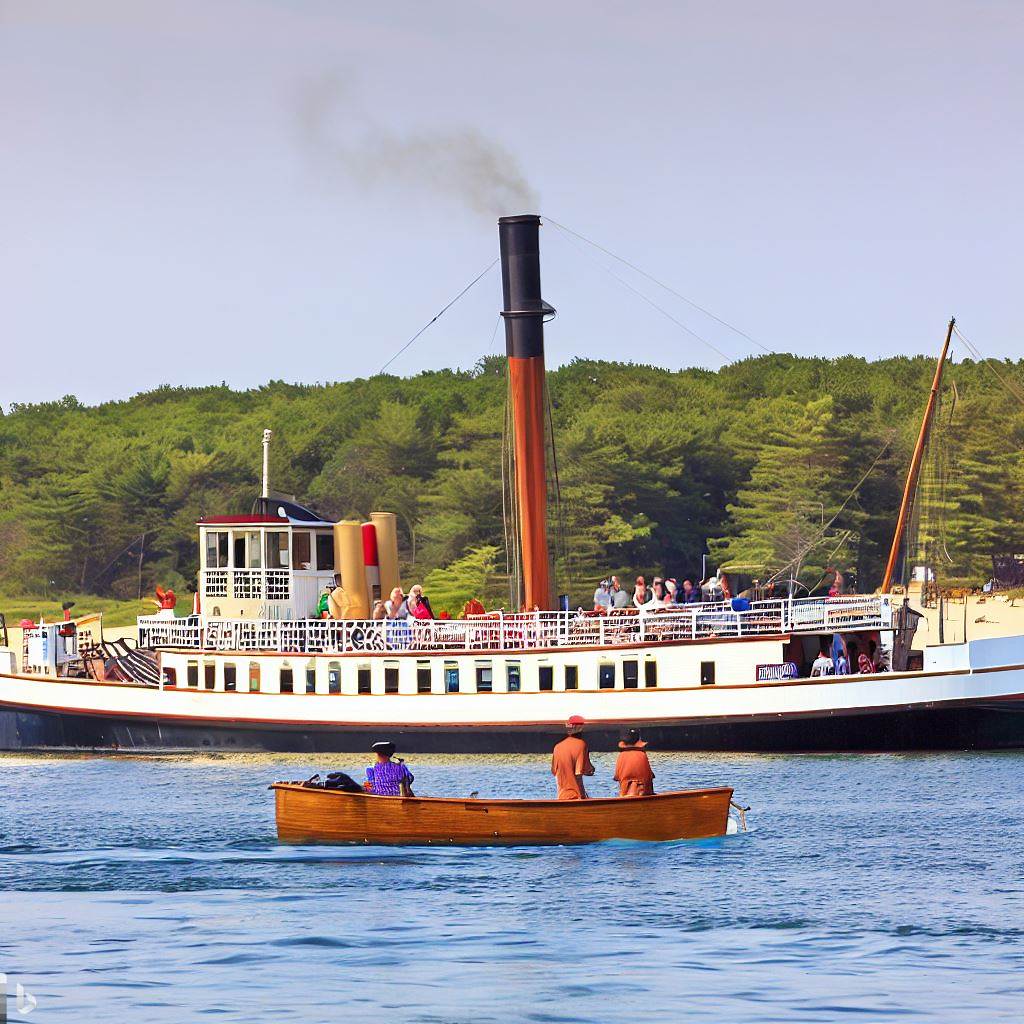
If the journey
called to you it was possible to take a visit to either island of
Martha’s Vineyard or Nantucket via the New Bedford, Martha’s
Vineyard & Nantucket Steamboat Line. This was the predecessor of
the Steamship Authority. Several trips were leading out of Woods Hole
daily.
Excitement was in the air on Cape Cod when in June 1923
the Cape Cod Baseball League was formed with William Lovell of
Hyannis serving as its first president. Four teams, Falmouth,
Hyannis, Osterville, and Chatham would play a total of twelve games
each. Opening night was July 10th as Falmouth defeated Osterville
11-7. It was not to worry for Osterville however as they would become
the inaugural Cape League champions.
As it is in present-day
the crown jewel of Cape Cod summer in 1923 was the Barnstable County
Fair. It opened Tuesday, August 28th, and was held for three days
rather than a week like today. The fair was known as the Cattle Show
and Fair of the Barnstable County Agricultural Society. It was held
in Barnstable at the time near the County Court House. There were
horse shows that drew upwards of 15,000 people. Also on the grounds
were cattle shows, electrical appliance exhibits, swings, a
merry-go-round, floral arrangements, and more.

If unable to
come to the Cape for the fair the next best thing was the annual
Fourth of July festivities. There were town-sponsored fireworks
displays. However, if you wanted to create your own show you could
find ads in the local newspapers for stores like B.T. Gorham’s in
Yarmouth Port, and A.C. Ryder’s in South Yarmouth selling all of
the fireworks you could need. There were numerous special events
including dinners, dancing, and more to celebrate Independence Day on
Cape Cod.
Before you know it time is up. Your vacation on Cape
Cod during the summer of 1923 is now over. Hopefully, you enjoyed
your time on the Cape’s shores. Before crossing back over the Canal
be sure to gas up your vehicle. Also, stop by T.T. Hallet’s in
Yarmouth Port to take with you some classic Cape Cod cranberries or
other gifts and novelties to remind you of your trip. We hope it was
the cat’s meow!
All Images created with the help of Bing AI
-------------------------------------------------------
Purchase a DVD copy of the Lady of the Dunes documentary here:
Purchase the new book Searching for the Lady of the Dunes written by 12th Generation Cape Codder Christopher Setterlund.
Friday, September 16, 2022

Wednesday, July 22, 2020
In Their Footsteps: Cape Cod History - The Wellfleet Marconi Station
On January 18, 1903
the first ever two-way wireless communication took place between
President Theodore Roosevelt and England’s King Edward VII. It
changed the landscape of communication forever and paved the way for
radio and television to become a staple of life only a few decades
later. The site for this historic milestone was not a big city. It
was a remote section of beach in Wellfleet on Cape Cod. The man
behind this newfound wonder was Guglielmo Marconi. This is the story
of his wireless site that changed the world forever.
Guglielmo Marconi
was born in Bologna, Italy on April 25, 1874. He became a physicist
and in 1894 first began experimenting with radio waves as a student
at the Livorno Technical Institute in Rome. Basing his work on
advancing the previous work of Henry Hertz and Oliver Lodge Marconi
was able to develop a basic system of wireless telegraphy. From
there he received his first patent in England in 1897.
 |
| The former pavilion at the Marconi Site from 2011 |
After founding the
England-based Marconi Telegraph Company in 1899 Marconi got started
on perfecting his wireless telegraph. His first transmission
traveled only a mile and a half but was a success. In March 1900
rumors circulated that perhaps a Marconi wireless station could be
constructed on the Nantucket South Shoal Lightship.
In order to assure
a clear path between receivers Marconi looked for a companion site to
his wireless station in Poldhu on England’s west coast. He found a
perfect location in Wellfleet on Cape Cod. Plans for the
construction of a wireless station at Wellfleet began in May 1901
with the money for the station being fronted by English capitalists
and the work done by Boston contractors.
The Wellfleet
station was situated on eight acres of land, equipped with ten sets
of two poles. Each pole stood nearly 100-feet tall and were set in a
semi-circle fashion. The poles cost $2,900 ($88,000 in 2020) each to
build. In June 1901 the long-rumored wireless station on the
Nantucket Lightship was constructed, although this would only be
connected to Sankaty Head Lighthouse approximately forty-eight miles
away.
Catastrophe came
that November when the strongest storm in three years roared across
Cape Cod. The Marconi station in Wellfleet was completely destroyed
leaving vessels traveling between New York and Europe without the
added aide.
Ironically it was
only when the station was damaged by the storm that the people of
Wellfleet discovered that it was owned by Guglielmo Marconi. It had
been built in relative secrecy. Despite his great accomplishments in
the field Marconi himself remained reserved, not wanting to seem
boastful of how his invention was revolutionizing communication.
 |
| Guglielmo Marconi posing with his early wireless apparatus at the turn of the 20th century. (Smithsonian) |
In December 1901 a
wireless station was built at Signal Hill in St. John’s,
Newfoundland. This allowed Marconi to continue with his experiments
with the technology while the Wellfleet station was being rebuilt.
Signal Hill was about as close as North America could get to England
being 900 miles closer to the Poldhu station than the Wellfleet
location.
It took more than a
full year for the new wireless station to be finished in Wellfleet.
In December 1902 it was completed with four 250-foot tall towers on a
rectangular base replacing the original setup. Marconi himself
arrived from Sydney, Australia to inspect the station marking the
first time he had set foot on Cape Cod.
Not long after his
arrival on the Cape Marconi and his assistant George S. Kemp got to
work on what would be his greatest achievement to that point. The
messages between the two world leaders was to be the grand reopening
of the Marconi Wireless Station in Wellfleet. The Wellfleet station
initially had the call letters CC (Cape Cod), this would change to
MCC (Marconi Cape Cod), and finally to WCC when all eastern stations
took the W prefix.
As previously
stated the date of January 19, 1903 was a landmark day in
communication. It was on that date where the first two-way wireless
conversation took place between President Theodore Roosevelt and King
Edward VII.
This accomplishment
made it impossible for Guglielmo Marconi to remain in the shadows of
success any longer. Within a week of the transatlantic conversation
reporters from the leading newspapers and magazines of Boston and New
York descended upon Wellfleet for a chance to find out about the man
behind the invention. Marconi had high hopes of securing the rights
to wireless communication basically everywhere in the world. He was
referred to in some newspapers as a ‘wizard’ and his achievements
were seen as more impressive by the fact that he was not even
twenty-nine years old yet. Just as the fervor around the young
inventor reached a fevered pitch Marconi left Cape Cod and returned
to England by way of New York. He would return often to Cape Cod
however.
Marconi’s goal of
commercializing wireless communication came true in September 1907.
The messages were sent at a rate of twenty words per minute with the
cost ranging from 10 cents a word for regular messages ($2.74 in
2020), and 5 cents a word for press related messages ($1.37 in 2020).
In 1909 Marconi received the Nobel Prize for Physics sharing the
prize with fellow wireless communication pioneer German physicist
Karl Ferdinand Braun.
A second wireless
station was built by Marconi in Chatham overlooking Ryder’s Cove in
1914. The site was chosen for its relative isolation and was built
for a total cost of $300,000 ($7.7 million in 2020). In 1920 the
station became part of the Radio Corporation of America (RCA). It
inherited the WCC call letters and became the busiest ship-to-shore
station during much of the 20th century.
 |
| A postcard of the Wellfleet Marconi Site from 1905. |
When World War I
came knocking for America the United States Navy took possession of
the Wellfleet station as well as the Chatham site. In April 1917 the
Wellfleet site fell under the command of J.W. Mullins, the chief
electrician of the Navy. This proved to be the beginning of the end
for the wireless station on the Outer Cape. After the war ended the
station closed. The writing was on the wall from nature as well.
The bluffs along
the Outer Cape have been ravaged by erosion for many decades. Even a
century ago the cliffs rapidly eroding to the point that the concrete
bases closest to them were already being compromised before the
station’s official closing. Despite rumors of the station possibly
reopening late in 1919 nothing came to fruition. The closure of the
Wellfleet Marconi station was a mixed blessing for the residents of
the town. They were not completely upset with its demise due to the
fact that while in operation the sparking of 30,000 watts supplied by
the three-foot rotor could be heard up to four miles away.
Guglielmo Marconi
continued his research and experiments with wireless technology
throughout the remainder of his life. Some later achievements
included a mean system for long distance communication and
experimentation with microwaves and the principles for developing
radar. He received numerous honorary degrees and awards during his
lifetime. After a few years of declining health Marconi died in
Rome, Italy from a series of heart attacks on July 20, 1937 at the
age of 63.
His Wellfleet
wireless station site would be wiped off the map entirely over time.
It was dismantled in 1920. Between 1902 and 1972 the bluff in front
of the station eroded 170 feet. Two of the concrete bases for the
towers eventually fell to the sea. Camp Wellfleet was constructed on
the grounds in 1942 and remained there until 1961 when after it was
deemed unnecessary it became a part of the new Cape Cod National
Seashore.
In 1953 a plaque
commemorating the conversation between Roosevelt and King Edward from
1903 was placed at the site. A shelter was constructed in 1974
housing a scale replica of the wireless site along with a bronze bust
of Guglielmo Marconi. The beach below the cliffs was named Marconi
Beach for the inventor.
 |
| An exposed base from the Marconi Wireless Site in 2011 |
In a final piece of
irony the eroding cliffs claimed the replica of the station as well.
In July 2013 the replica and bust were removed and the shelter
demolished. Incredibly only a short time before this a pair of the
original concrete bases were exposed at the beach below. Sadly today
the only remains of the original Marconi wireless station are bits of
wood and brick gathered neatly in an area close to the eroding
cliffs. Someday those will have to be removed as well.
----------------------------------------
My first eBook in 10 years, In Their Footsteps, featuring the interesting stories of Cape Cod's history, is on sale at Amazon.com.
View my previous blog posts: In Their Footsteps: Cape Cod History - The Great Colonial Hurricane
In Their Footsteps: Cape Cod History - Samuel de Champlain and Port Fortune
Photo Prints available here: Smug Mug.com
Be sure to check out my website: Christopher Setterlund.com
My first eBook in 10 years, In Their Footsteps, featuring the interesting stories of Cape Cod's history, is on sale at Amazon.com.
View my previous blog posts: In Their Footsteps: Cape Cod History - The Great Colonial Hurricane
In Their Footsteps: Cape Cod History - Samuel de Champlain and Port Fortune
Photo Prints available here: Smug Mug.com
Be sure to check out my website: Christopher Setterlund.com
Thursday, December 5, 2019
In Their Footsteps: Cape Cod History - Cape Cod's First Radio Station
In
1903 the first transatlantic wireless communication took place in
Wellfleet thanks to the invention of Guglielmo Marconi. It was the
beginning of radio. 2020 will mark the 100th anniversary
of the first commercial radio broadcast. However it did not take
place on Cape Cod but from Pittsburgh, Pennsylvania. There have been
many legendary radio stations on Cape Cod. 106 WCOD is still going
strong since debuting in 1967, others like 99.9 WQRC and 107.5 WFCC
have been supplying music to various audiences for decades. In 2019
there are an estimated 15,330 radio stations in the United States.
Did you know that Cape Cod’s first radio station came in with a
bang, make a quick splash, and left with barely a whimper?
On
November 2, 1920 Pittsburgh radio station KDKA aired the first
commercial broadcast. The station had chosen election day in America
so listeners could hear the results of the race between Warren G.
Harding and James M. Cox which Harding won. The broadcast was a huge
success. Within four years there were 600 commercial radio stations
in the country including WNAC in Boston, the future WRKO, and WEEI.
These stations, and infrequently WEAF out of New York, could be tuned
in to on Cape Cod.
News
programming and musical shows were the norm with special guest
performers. To offset the costs of paying the performers plus
improving the radio station equipment stations turned to advertisers.
The very first radio advertisement, a fifteen-minute real estate ad
about apartments in Jackson Heights, aired on WEAF New York on August
22, 1922. Radio became big business with advertising and networks
developing and sharing programming among affiliates.
The
rising popularity and profitability of radio led to Cape Codders
longing for their own local station. Boston and New York stations
were accessible to varying degrees however lacked the local feel and
coverage. In July 1926 their wish came true. A station was created
in Osterville through the efforts of James Henderson, the president
of the firm of Henderson & Ross. It was a 200 watt station
located at the Seapuit Golf Course, one of the first built in
America, along South County Road. The station, which would operate
on the 250 meter band, was to be known by the call letters WJBX,
however it debuted with the letters WSGC possibly as a nod to Seapuit
Golf Course.
The
job of running the new radio station fell to William Harrison who had
been working as a broadcaster for WEEI in Boston. The hype for the
opening night of Saturday July 24th was palpable in all of
the local newspapers. Harrison stated the station’s signal was
strong enough to be heard throughout Cape Cod and Southeastern
Massachusetts. An additional promotion was begun by James Henderson,
it was a cash prize of $25 for the telephone call received at the
station from the furthest away by midnight of the first day on the
air. All other telephone callers would receive complimentary copies
of Cape Cod Magazine (the original version which was in print from
1915-1927)
 |
| Aerial view of Seapuit Golf Course from 1892, courtesy of Marstons Mills Historical Society |
Opening
night of the new WSGC began at 7:30pm with a half-hour performance
from Joe Rines and his Sunkist Garden Orioles orchestra. Sunkist
Garden was briefly the name given to the Mill Hill Pavilion located
where DiParma Restaurant currently stands in West Yarmouth. The
music was followed by a brief introductory discussion by founder
James Henderson. He then threw it to a discussion featuring
Massachusetts Amateur golf champion Freddy Wright and golf course
architect Donald Ross among others. It was fitting for the station’s
headquarters. From 9-11pm there was a collection of dance music
featuring the likes of Jim Moynihan’s Orchestra, soprano singer
Jean Hinkle, and pianist H.C. LeBrie. The night was deemed a
success. More than 200 telephone calls were received by midnight
with the furthest point heard from being Lexington, Massachusetts
approximately seventy miles away.
WSGC
was to be on the air every evening except for Monday between
7:30-11pm typically following the same format of musical interludes
and discussions of topics central to life of Cape Cod. The
programming found an audience with letters coming in from as far away
as Concord, New Hampshire by the middle of August. William Harrison
continued to bring in big time local musicians like Chet Copp and the
Eagleston Inn Orchestra out of Hyannis. On August 17, 1926 Harrison
was contacted by the Department of Commerce from Washington D.C.
informing him that the station’s call letters were originally
supposed to be WJBX not WSGC and that the department was immediately
changing them.
 |
| Program Listing for WSGC's Opening Night, courtesy of Boston Globe Archives |
The
new WJBX continued on with its successful programming six nights a
week throughout the remained of the summer. It was announced that as
Labor Day passed the radio station would cease operating until the
following spring. The final night of Sunday September 5th
featured a worship service led by Reverend H.P. Almon Abbott and
finally a short recital featuring Jean Hinkle. WJBX closed for the
season at 11:30pm. On September 13, 1926 the Radio Corporation of
America (RCA) created the first national radio network, the National
Broadcasting Company (NBC).
William
Harrison stated that due to the station’s success he was excited
for the second season in 1927, promising new shows from outside the
confines of the Seapuit Golf Course station. The likely relaunch was
set for June 1927. Unfortunately the relaunch never came. It is unclear why but WSGC/WJBX
ended up being nothing more than a flash in the pan, a test run for
what would be coming in the decades that followed.
James
Henderson went back to focusing on his real estate while Harrison
went back to Boston to continue his radio career. The Seapuit Golf
Course slowly declined through the Great Depression before the entire
property was purchased by Canadian ‘Aluminum King’ E.K. Davis.
The golf course was abandoned after severe damage during a hurricane
in 1944 and today there are very few, if any, reminders of the golf
course left.
Cape
Cod would not see a new radio station until the formation of the Cape
Cod Broadcasting Company in 1937. Two years later came a proposal by
Joseph Goulding for a station on 8 ½ acres of land on South Sea
Avenue in West Yarmouth in June 1939. He said the station would have
the call letters WOCB for ‘Only Cape Broadcasting.’ A 195-foot
tall radio tower was erected and the second-ever Cape Cod radio
station went live on October 2, 1940. It ran out of money and folded
in May 1943 before being brought back to life by new owners E.
Anthony and Sons in May 1944.
 |
| A postcard for WOCB from the early 1950's, courtesy of American Radio History.com |
In
May 1948 WOCB became Cape Cod’s first FM station. It remained in
business until Hurricane Bob felled the radio tower in August 1991
and the owners could not afford to rebuild. The station was
purchased by automobile dealer Ernie Boch Sr. to become the flagship
station for his Boch Broadcasting. Its call letters were changed to
WXTK and the station is still on the air today.
Despite
being the first radio station on Cape Cod nary a word is spoken about
WSGC. Perhaps because it only last two months. Perhaps because its
home base the Seapuit Golf Course is long since gone WSGC lends
itself to being a mere footnote in the long history of Cape Cod
radio. However in the legacy of radio stations on Cape Cod there had
to be a first and that one was WSGC in Osterville.
View my previous blog posts: In Their Footsteps: Cape Cod History - Sullivan's Donut Shop
Wednesday, December 4, 2013
In My Footsteps: Cape Cod - Marconi Wireless Site & White Cedar Swamp
My first book, In My Footsteps: A Cape Cod Travel Guide, is now available at SchifferBooks.com, BarnesandNoble.com, and Amazon.com, and stores everywhere! Follow me on Twitter and YouTube for more on In My Footsteps.
!
!

Thursday, February 11, 2010
In My Footsteps: Trip 22: Chatham, Mass.
In My Footsteps
Christopher Setterlund
Trip 22: Chatham, Mass.
February 4, 2010
Chatham packs a large amount of beauty and history into a relatively small area. Still a very vibrant fishing village, Chatham’s loyalty to its heritage is a big part of its charm. Its Main Street is filled with quaint family style shops and is the most accessible for pedestrians on the Cape.
 The first place that should be visited during a trip to Chatham is Chatham Light(left) and North Beach. North Beach is located near the end of Main Street and is a continuation of Nauset Beach in Orleans. This beach has its own incredible story as up until 1987 the beach had been known as a ‘barrier beach’ and had continued down toward Monomoy Island. A huge winter storm caused a break in the beach directly opposite of Chatham Light which eventually widened and caused the loss of seven North Beach cottages. A second break occurred in 2007 a little further north and the initial break has now widened to nearly two miles. It is a fascinating scene of the ocean versus the land; the beaches can be observed easily from the elevated parking lot which also has three sets of powerful binoculars to aide in viewing.
.jpg)
After checking out the sea’s ravaging of North Beach one only has to turn around to view perhaps the most popular spot in Chatham and that is Chatham Light. A part of the Coast Guard station, Chatham Light was originally built in 1877 but the station itself was established in 1808 under orders from President Thomas Jefferson. The first Chatham Light station consisted of two lighthouses for 115 years until one of the lights was moved and placed in Eastham where it became Nauset Light. The original Chatham Light lantern and lens were removed in 1969 and are currently on display at the historic Atwood House a short drive away on Stage Harbor Road. The lighthouse is not open to the public except for special tours during the warmer months, but the view of this Cape landmark is spectacular from just beyond the fence as well.
Located down Bridge Street is Stage Harbor, a spot originally visited in 1606 by French explorer Samuel de Champlain. However, he did not choose to settle there due to conflicts with the local Monomoy Indians. Stage Harbor Lighthouse(above) sits at the mouth of Chatham Harbor. Built in 1880 this lighthouse was deactivated in 1933 and does not have a lantern top anymore. It is viewable across the harbor opening from the Monomoy National Wildlife Refuge, or via a mile long hike across Hardings Beach. It is the Monomoy National Wildlife Refuge that was the next spot I visited.

Located a short drive from Chatham Light down Morris Island Road, this 7,600 acre wildlife sanctuary is filled with natural beauty and is perfect for sightseeing and school field trips. There is a trail which leads along the high cliffs and has a great view of the northern portion of Monomoy Island(right). There is a weather radar station behind a fence along the trail as well. There is a set of stairs which leads down to the beach and seemingly the end of the civilized world. Once you start to walk south there is complete solitude but for the occasional passing of small fishing boats into the harbor. It is a very relaxing walk as the rushing waves and salty breezes seem to melt away any conscious thoughts. The walk south along the beach ends with a panoramic view of Monomoy Island which at low tide sits only a few hundred feet offshore.
Monomoy Island stretches eight miles south from Chatham and was originally owned by the government during World War II. The Monomoy National Wildlife Refuge was founded in 1944 and took over control of the island. Long before it was designated for wildlife refuge there actually was a colony on Monomoy complete with a tavern for sailors at present day Hospital Pond. There are no paved roads and no human inhabitants on Monomoy but ferries will take visitors along its shores in the hopes of spotting seals. The only proof of a human presence on the island is the historic Monomoy Point Light which was built in 1849. It is part of the National Register of Historic Places and the keeper’s house still stands and is used as a guest house today.

Located west of Chatham Light, down Rt. 28 sits a lesser known but equally fascinating piece of modern history. Forest Beach in and of itself seems like just another beautiful beach with a great view of Monomoy Island and Stage Harbor Light, but it is what lies behind the beach in the marshy area that is surprising. There are four cement pillars in a square pattern out in the marsh that represent the remains of Guglielmo Marconi’s Chatham radio tower(left). The tower once stood 300 feet tall until the land was bought by the town. The Forest Beach overlook located behind the marsh area has a plaque with a detailed history of this little known Marconi site.
Chatham mixes all of what makes Cape Cod great into a small area. You can go from a leisurely stroll on Main Street to the history of Chatham Light and Monomoy Island all within a short drive. The ‘elbow’ of the Cape has something for everyone and it needs to be circled on any visitor’s itinerary. Do not rush, take your time to enjoy it, the spectacular Chatham Bars Inn resort can make a great trip into a dream vacation. Whether it’s a trip or vacation you will love your time in Chatham. Have fun and happy traveling!
Directions: Chatham Light/North Beach: Head east on Rt. 28, take 2nd exit at traffic circle to Main Street. Follow Main Street to parking lot, beach is on left, lighthouse is on right.
Monomoy National Wildlife Refuge: Take Rt. 28 east, take 2nd exit at traffic circle to Main Street. Bear left on to Morris Island Rd., continue onto Tisquantum Rd. Wildlife Refuge is the 1st left.
Forest Beach: Take Rt. 28 heading east into Chatham. Turn left onto Forest Beach Road.
Hardings Beach: Take Rt. 28 east into Chatham, turn right at Barn Hill Rd. Take a slight right at Hardings Beach Rd., Stage Harbor Light is located east, a mile walk out on the beach.
References: Chatham Bars Inn
Friday, January 29, 2010
In My Footsteps: Trip 13: Wellfleet, Mass.
In My Footsteps
Christopher Setterlund
Trip 13: Wellfleet, Mass.
January 26, 2010
Nestled deep in the heart of the Cape Cod National Seashore, Wellfleet is a picture perfect example of vintage Cape Cod. Any turn off of Rt. 6 will lead you into the natural wonders of the Seashore, you can’t go wrong with any road you choose. Wellfleet also houses one of the last remaining Drive-In theaters in the country; this is open during the warmer months and is a trip down memory lane.

The first spot I found was actually a left turn off of Rt. 6. In the hopes of finding a spot I had never before seen I took a turn onto Coles Neck Road. The area I found was Bound Brook Island. It consists of an amazing scenic beach(left) but getting to it is the hardest part. Bound Brook Island Road is dirt and uneven, it might be better to park and walk or bike to it if you do not have a four-wheel drive vehicle. The land along side the road comes up a few feet and makes it feel like you are driving down a chute; there are very few places to turn around until the small beach parking lot.
Once you make it to the beach though it will all seem worth it. There is a sandy pathway leading over the dunes to a beach with a tremendous view across Cape Cod Bay. On a clear day it is possible to see straight across to Plymouth and other South Shore communities. The view from the shore is amazing, but there is another spot that has the best view of all. There is a sloping sandy hill at the beach at the end of Bound Brook Island Road with a path leading to its seventy-plus foot high peak. From there you will feel like you can see from Provincetown to Maine. This view in and of itself made the tough trek to the beach a mere footnote.

The next place I visited is a lot like Bound Brook Island. It is an island and is very difficult to get to, but the views are worth it. Lieutenant Island is a little south of Bound Brook and is only accessible at low tide. There is a bridge which passes over the marshy area(right) and although this bridge is slightly elevated the surrounding land is underwater at high tide. If you plan to visit please check tide charts as it would be easy to become stranded. The dirt roads can be treacherous so as with Bound Brook Island it is better to hike or take a bicycle if you do not have a sufficient vehicle.
Lieutenant Island is filled with summer homes and on this day was virtually deserted. It is quiet and secluded in the colder months with beach views of Loagy Bay to the east and Cape Cod Bay to the west. At times it can be an odd sort of clash between the wetlands and forest areas but that unpredictable scenery is what adds to the allure of this tiny island.
The next area I visited is much easier to get to. The Marconi Station Site is on the Atlantic Ocean side of Wellfleet and hovers precariously above a sharp cliff and pounding surf. The site is a dedication to Guglielmo Marconi who in 1901 oversaw the building of the first transatlantic wireless telegraph station: The first radio station. In 1903 the first wireless message was sent from a spot not too far from the dedication site across the Atlantic from President Theodore Roosevelt to King Edward VII of England. The station that once stood here also was one of the first to receive distress calls from the Titanic after it struck the iceberg in 1912.

There is a platform on a hill near the dedication site that offers a wide view of the Atlantic and the Seashore lands surrounding the Marconi site(right). The site originally had four 210-foot tall wooden towers in a square around the transmitter building when built. Due to heavy erosion of the cliffs however the site only remained operational for sixteen years and was closed and dismantled in 1917. This is a great place for historians and nature lovers alike to visit. Seeing the small scale model of the original Marconi site it is easy to close your eyes and imagine seeing those giant towers from all around Wellfleet.

As awe-inspiring as the Marconi site and scale model are for historians there is a place that produces the same feeling for nature lovers just across the parking lot. A mile long hike into the sandy pine forest will lead you to the White Cedar Swamp(left) which seems so out of place along the beaches and ocean. The land leading up to the swamp is common for Cape Cod but the White Cedar Swamp seems to come up out of nowhere. There is a boardwalk to lead you through the area. The trees block out most of the sun allowing only trickles of light to splash through to the water. It is a dusky feeling even in midday that is strange and beautiful. It is one of the most recommended spots to visit on all of Cape Cod as words and images can only do so much to describe this wondrous setting.
At the end of the day Wellfleet takes its places among the other Cape Cod towns with its share of nature and history that sums up what the Cape is all about. Rt. 6 is barren and quiet at this time of year but during the summer months lodging and food are easy to find. No matter the time of year though the sites of Wellfleet can be enjoyed by any visitor. Have fun and happy traveling!
Directions: Bound Brook Island: From Rt. 6 head north past Wellfleet Center. Turn left onto Coles Neck Rd. This road becomes Bound Brook Island Rd. Follow it for about a mile and turn left, this is still Bound Brook Island Rd. Follow the road straight to the beach, go slow and be careful the road is dirt and narrow.
Lieutenant Island: From Rt. 6 head north about 1.5 miles past the Wellfleet Drive-In. Turn left onto Lieutenant Island Rd. Follow it over the bridge at the marsh. Drive slowly and carefully as the island roads are dirt and fragile.
Marconi Site & White Cedar Swamp: From Rt. 6 turn right onto Marconi Beach Rd. Bear left and follow road to parking lot. Marconi Site is toward the beach. White Cedar Swamp is located on far left of parking lot designated by a sign.
References: History of the Marconi Site
Subscribe to:
Posts (Atom)