Pages

Showing posts with label west barnstable brick. Show all posts

Monday, April 21, 2025

Initial Impressions 2.0 Blog #65: Dock Installing, ChatCBD, Tick Stowaway, etc.


1. Twice a year my buddy Steve and I help a couple install and remove their lakeside dock at their property. It is good money for a short amount of time. Typically it takes us 20 minutes to get the 3 pieces of aluminum dock either down into the lake or up the stairs from the lake. It is a relatively fun time as the couple from New York are super nice and very appreciative. I will say though that it gets harder carrying the dock up and down the steps each time I do it. My elbows, shoulders, and low back are tight but getting a fistful of cash always makes the pain go away. That and ibuprofen, lots of ibuprofen.


2. I saw that Alice In Chains is on tour and is coming to Mohegan Sun in a few weeks. Man, 17-year-old me would have killed to see them, even without Layne Staley. Sadly being an adult makes spontaneous concert trips less likely. Oh I could swing the tickets and a hotel room but my mind goes to taking the day off of work and canceling clients, etc. 17-year-old me would probably slap the hell out of me if he heard that but it is what it is. Maybe if the show was a few months away I’d go. Come to think of it, I can’t remember the last concert I went to period. Boy, that’s sad. I’ll have to change that in the near future.


3. It can get frustrating when your brain and your body don’t match up. I remember all of my running feats, personal bests, etc. However since my hip injury in 2017-18 I can only match those efforts in short bursts. I get down on myself but then it dawns on me. Who am I trying to impress? Honestly, who cares if I can run a 5:30-minute mile ever again? Maybe in time I can get closer to who I used to be but for now I need to be happy with being able to just be out on the road or bike trail or wherever I go.


4. Leaving things left unsaid is the worst pain. Finding a letter you meant to send to someone very special for their birthday 20 years ago stings bad. On one hand it reinforces the feelings I had for a girl that changed my life forever. Now, 20 years on, it makes me feel a bit empty. For one I have no way to get in touch with her today which means words left unsaid will remain unsaid. Also I know she has a totally full life that I’d never want to disrupt. I’m not saying that if I sent that birthday letter back in 2005 that she and I would be together now but leaving the words unsaid means I’ll likely never know what difference those words might have meant.


5. I am a big fan of ChatGPT. I use it to help me organize my podcast notes, to brainstorm ideas for future YouTube videos. I also enjoy Bing AI to craft realistic images of things I can’t capture with my camera. Perhaps the best new offshoot of these sites is the Sora image tech that’s a part of ChatGPT. You can upload your own photos and remix them into something else. For example, a goal of mine is to take a photo of me in high school and a photo of me present day and mix them together where we’re shaking hands with a caption, “Become the person your younger self would be proud to meet.” Or something similar to that. I had to laugh, though at this idea. I took an old photo of when I discovered a secret solitary grave deep in the woods of Truro, MA. I took a photo of myself hugging it in celebration. The remixed photo shows the spirit of the man buried there embarrassed by my emotional outburst. It’s pretty funny if I do say so myself.


6. This is the longest my hair has been in a lot of years. I used to buzz it to the skin almost weekly for close to 14 years. I am having to get used to having hair but it’s not so bad. That being said I did go on a photography adventure in the woods and ended up with a tick in my hair. I didn’t notice it for a few hours because it was bushwhacking through my hair. Luckily, I found it and dispatched of it. Just to be safe I did take a shower and scald myself in search of any others.


7. That photo adventure was a trip through the overgrown brush to the remains of the West Barnstable Brick Factory. A century ago it was a thriving business on Cape Cod making tens of millions of bricks annually. They dug a hole to measure how much clay they had left to make bricks. In doing so they struck water, flooded the clay pits, and went out of business shortly thereafter. It’s wild to stand before the crumbling facade and other remnants of a once mighty business. It’s also a difficult place to get to, especially during the warmer months. There’s water everywhere, greenhead flies everywhere, and no real trail to the factory. Anyone who attempts to visit should be prepared to get muddy, wet, chewed up, sliced by thorns, jabbed by branches, and of course attacked by ticks.


8. Easter Sunday was so much fun. Food, family, loads of laughs. I had to make sure that I held back a little when it came to eating. On Thanksgiving, I ate so much that I ended up having to go home early because I was filled to the max. I was smart but I still had a good amount of ham, pot roast, mashed potatoes, and a wealth of desserts. It made me very glad that I went for a run in the morning.

My running route on Easter Sunday.


9. A highlight of Easter was the moneymaking idea my niece Emma and I came up with. In the spirit of ChatGPT, we decided to invent ChatCBD. It would be an AI product that reads your stress level and releases the appropriate amount of CBD needed for you to feel better. I have no clue how the product would get made, I’m just the idea man.


10. Easter was also April 20th, 4/20. Naturally, I celebrated with a little edible fun in the evening. I had to look it up and find out why 4/20 is the code for weed. Credit goes to five high school students in San Rafael, California, who in 1971 used "4:20" as a code to designate their meeting time to search for an abandoned cannabis crop, referring to it as "4:20 Louis.” So there you go, the more you know.

Sunday, May 14, 2023

Cape Cod 1923 Summer Vacation Video


Friday, May 12, 2023

In Their Footsteps: Cape Cod Summer Vacation 1923


    You’ve finally made it. After a long cold winter, the warm weather has arrived. It is time for a trip to Cape Cod for a summer vacation. You pack up the car and the kids and head for the Cape but this is not 2023. No, you are heading for a vacation on Cape Cod in 1923, one hundred years ago. What did a trip to the Cape look like back then? Let’s find out.
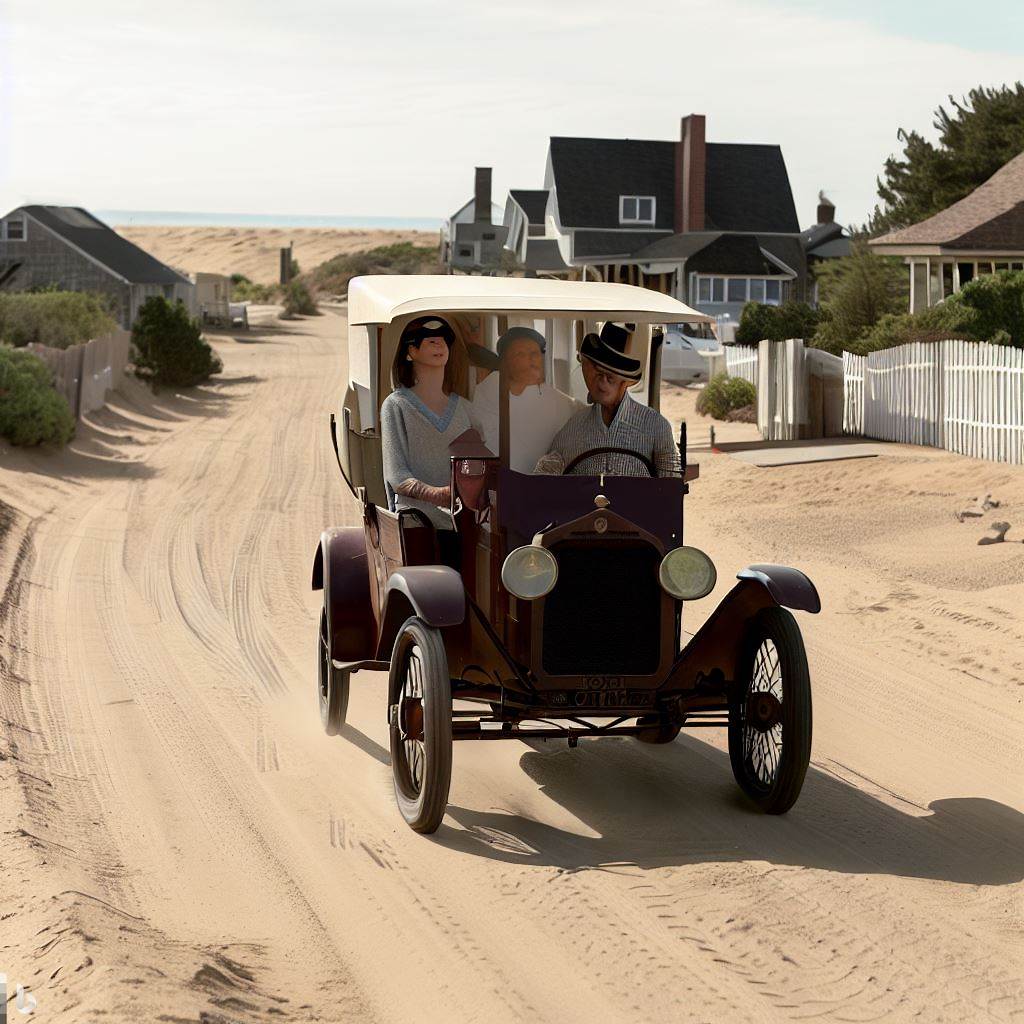
    First and foremost do you have your own vehicle or do you take a train? If you have an automobile you are one of the lucky ones. It would take until 1930 for more than half of American families to own automobiles. If you had a vehicle it was most likely the Ford Model T as 1923 was its best year for sales with more than two million units produced in that year alone. Other popular vehicles included the Chevrolet Superior and the Dodge Brothers Touring Car. These cars were quite different from the vehicles of today, with their exposed engines and spartan interiors.


    As you approach the Cape Cod Canal it looks different. The canal, which by 1923 had only been in operation for nine years, was still at its original width of 100 feet. It would not reach its present-day width of 480 feet until 1940.
    Naturally, with a narrower canal, the three bridges that crossed it were also different. The Sagamore and Bourne Bridges were drawbridges in 1923. Both bridges consisted of two 80-foot cantilever sections that rose to allow vessels to pass through. The railroad bridge was a 160-foot cantilever bridge that pivoted upward on its north foundation. These three bridges remained in use until 1935 when all three were replaced with the current bridges.
    You have now made it onto Cape Cod. There are fifteen towns and 143 unique villages. A major difference you will notice after crossing a bridge is that there is no Mid-Cape Highway. It won’t be until 1950 that the highway opens from the Sagamore Bridge to West Barnstable. This was Exit 6, present-day Exit 68. It is a slower go of things getting around on the Cape in 1923. Luckily Route 6A, then known only as the Old King’s Highway, existed to bring people all the way out to Provincetown.
    The big question now is where are you going to stay during your summer vacation? One thing Cape Cod did not lack in 1923 was popular resorts and hotels. In fact, the world-famous Chatham Bars Inn existed back then, although on a far smaller scale. If you couldn’t find room at CBI there was no need to despair.


    Some of the iconic hotels that you could have stayed at in 1923 included Aberdeen Hall on Great Island in West Yarmouth, Terrace Gables in Falmouth Heights, Chequesset Inn in Wellfleet, The Pines in Cotuit, and Hotel Belmont in Harwich. It was common in those days to vacation in the same place for weeks or even the entire summer. Hopefully, you enjoy your surroundings.
    If you were lucky enough to stay at one of these fine hotels perhaps your room would have the hot new technology known as a radio in it. Although there were no broadcast radio stations yet on Cape Cod the medium would explode in popularity over the rest of the 1920s. The majority of what would be heard in 1923 would be from tiny amateur stations that would broadcast at random hours.
    So you have found a place to stay. What next? It’s probably a good idea to find somewhere to get a bite to eat. Don’t go looking for franchises like McDonald’s, Wendy’s, or KFC though. Franchises as a concept don’t even exist yet. The first restaurant franchise was a Howard Johnson’s which opened in Orleans, Massachusetts in 1935. Not to worry though, there were plenty of great places to eat on Cape Cod in 1923.
    Driving around Cape Cod you will find an abundance of tearooms. These were Victorian-era establishments that functioned as small restaurants that served light meals, snacks, and of course tea. Some of the popular tearooms in 1923 included the Whippoorwill in Bourne, the Chatham Tea Room, and the Grey Gull in Falmouth. The Grey Gull would go on to become an infamous speakeasy during the waning days of Prohibition as The Hangar tearoom.
    Of course, if you were looking for some names familiar to longtime Cape Codders there were a few. You could grab a bite at the East Bay Lodge in Osterville, the Old Yarmouth Inn (then known as the Yarmouth Tavern), or the Daniel Webster Inn in Sandwich.
    If you were looking to make yourself a home-cooked meal, or just grab some necessities, it might have been easier to go to the market or drug store. Megathlin’s in Hyannis was the tops as far as drug stores went. There were no supermarkets to speak of in 1923. You could venture out to the local Atlantic & Pacific Tea Co. (A&P), with locations in Falmouth, Provincetown, and Dennis Port among others. This was not the mammoth supermarket we see in the 21st century though.
    When looking for familiar brands to purchase there were many that are still prominent today. These include Coca-Cola, Heinz ketchup, Wrigley’s gum, Kellogg’s Corn Flakes, Bayer aspirin, Campbell’s soup, Hershey’s chocolate, Kodak film, Colgate toothpaste, and many more.
    Accommodations have been set, and you have had lunch or dinner, or at least visited the local market. What do you do for fun?     Obviously, Cape Cod has always been known for its miles of sandy beaches. It was no different one hundred years ago. You could spend the day at one of the beloved ‘bathing’ beaches like Craigville, Sandy Neck, Nauset, Race Point, and countless others. There was no option to drive over the sand to find a private spot so you would need to either walk through the dunes or learn to love the crowds.


On rainy days you could go and see a motion picture. These were still a part of the Silent Era and thus there was no dialogue, only music. Seats were available for matinees at the Idle Hour Theatre in Hyannis, Empire Theatre in Falmouth, and the Orpheum Theatre in Chatham. Tickets cost 35 cents for adults and 10 cents for children. What were the big summer films of 1923? They included The Covered Wagon, Safety Last!, Main Street, and a re-release of Monte Cristo.
    Perhaps you came to the Cape without children and wanted some fun nighttime adventures. Unfortunately, Prohibition was in effect so alcohol was illegal. This did not mean it wasn’t on Cape Cod though. Law enforcement was having a hard time stopping illegal ‘rum running’ that occurred along the Cape’s coast, specifically the beaches of Provincetown and Truro. There is a reason why Yarmouth’s Bass River Beach is more commonly referred to as ‘Smuggler’s’ Beach.
    Even without easy access to alcohol, there was no shortage of fun nightlife. The Mill Hill Pavilion in West Yarmouth, Chatham Pavilion, and Bournehurst On the Canal in Buzzards Bay offered nightly entertainment while many towns had dancing events on special dates throughout the year.
    Of course with the relatively new development of the automobile, coupled with the ‘Summer Playground’ that Cape Cod was referred to at the time by the Boston Globe, it might be a fun time to simply take a drive and enjoy the scenery.


    What would you see as you drove around Cape Cod in 1923?
In short, a whole lot of open space. In the 1920 census, Barnstable County had a population of 26,670. To compare, in the 2020 census the population was 228,996. That’s more than ten times the number of people. 

    As mentioned before there was no Mid-Cape Highway. There was no Cape Cod Mall. Route 28, typically the most congested roadway on the peninsula, was unpaved and still consisted mostly of residential homes and swaths of open land and forest.
    All of this open space would allow you to hear the unending hum of the 17-year locusts that had made Cape Cod their home in 1923. It was mostly contained between Falmouth and Hyannis though. In addition to locusts, a scenic drive along the Old King’s Highway might look different. In 1923, 97 large billboards dotted Cape Cod roadsides. These would slowly but surely be removed over the coming years due to fervor from residents.
    Perhaps while motoring along the Old King’s Highway you could stop for a few minutes to watch the bricks being made at the legendary West Barnstable Brick Factory. It was owned at the time by Cape Cod’s ‘cranberry king’ Abel Makepeace. In the 1920s it was reported that the factory could produce more than 100,000 bricks per day and more than thirty million per year. They were widely popular not only on Cape Cod but throughout the state of Massachusetts and even further.
    Driving to Chatham you will see a lot of construction happening. The big news in the town in 1923 is the dismantling of one of the Chatham Twin Lights. The north tower was shipped up to Eastham. There it replaced the final diminutive wooden tower of the Three Sisters. The former Chatham Twin was rechristened Nauset Lighthouse, although it would not receive its distinctive red and white coloring until 1940.
    At Mayo Beach in Wellfleet, you could gaze upon the recently deactivated Mayo Beach Lighthouse. Within a few years, it will be removed and ‘lost’ for more than eighty years. It will be ‘found’ in 2008 living a new life as Point Montara Lighthouse in California.
    You might take a drive to the ocean side of Wellfleet. There you could gaze upon the abandoned remains of Guglielmo Marconi’s revolutionary wireless station. It was here that the first transatlantic wireless communication took place in 1903. However much like today erosion was an issue in 1923. The station’s four towers had already been dismantled but their foundations and a few buildings remained.
    If you enjoyed shellfishing and a good adventure, you could take a day trip over to Billingsgate Island in Cape Cod Bay. Located about 2.5 miles west of Sunken Meadow Beach in Eastham this formerly thriving community was on its last legs. Erosion had wiped much of it off the map, with homes being floated across and assimilated into Eastham and Wellfleet. Its lighthouse had crumbled, replaced by a skeleton tower, but in 1923 it still had some of the best shellfishing on the Cape. Within twenty years though the island would be fully washed over and rechristened Billingsgate Shoal.


    A journey to the tip of the Cape in Provincetown was as wondrous then as it is today. The Portuguese fishing boats were aplenty, the Town Crier would keep you informed of all the local news, and if lucky perhaps famed poet Eugene O’Neill would come into town from his shack on the Peaked Hill Bar to say hello.
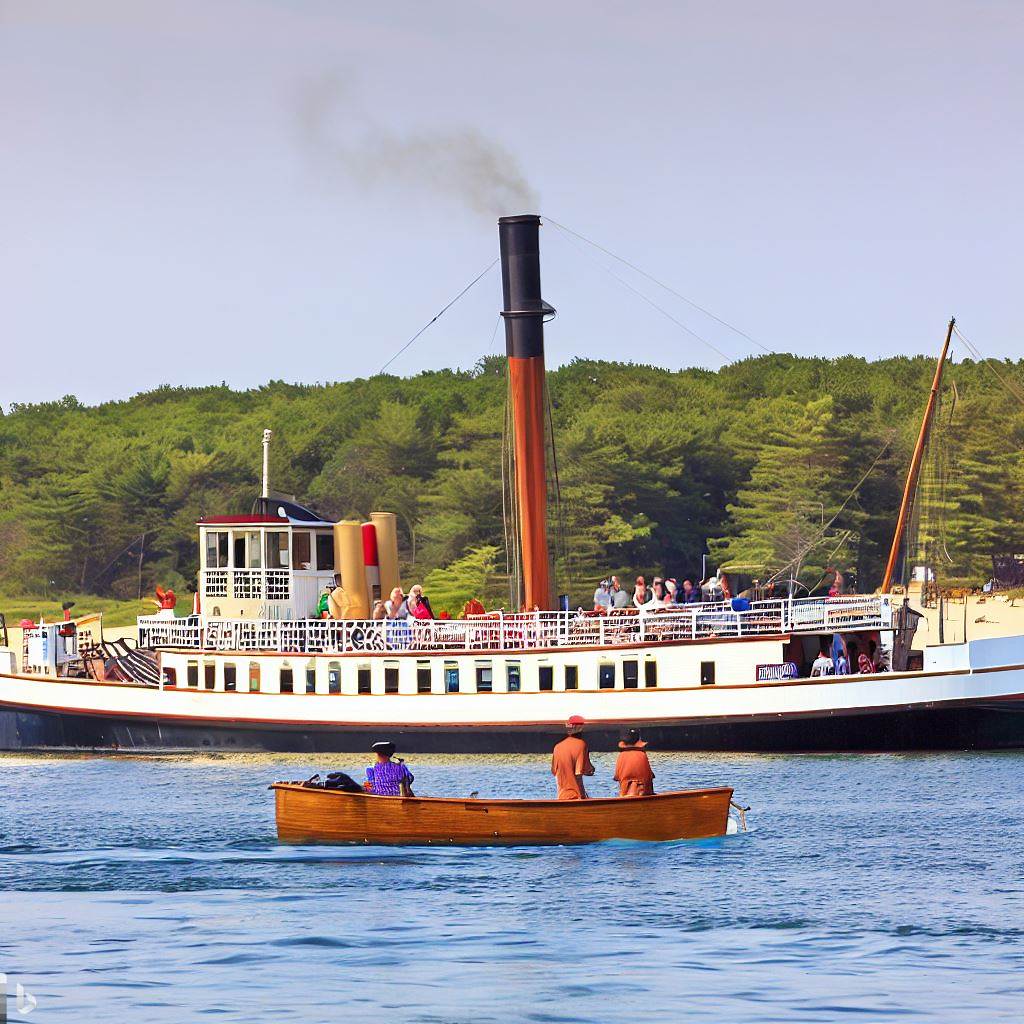
    If the journey called to you it was possible to take a visit to either island of Martha’s Vineyard or Nantucket via the New Bedford, Martha’s Vineyard & Nantucket Steamboat Line. This was the predecessor of the Steamship Authority. Several trips were leading out of Woods Hole daily.


    Excitement was in the air on Cape Cod when in June 1923 the Cape Cod Baseball League was formed with William Lovell of Hyannis serving as its first president. Four teams, Falmouth, Hyannis, Osterville, and Chatham would play a total of twelve games each. Opening night was July 10th as Falmouth defeated Osterville 11-7. It was not to worry for Osterville however as they would become the inaugural Cape League champions.
    As it is in present-day the crown jewel of Cape Cod summer in 1923 was the Barnstable County Fair. It opened Tuesday, August 28th, and was held for three days rather than a week like today. The fair was known as the Cattle Show and Fair of the Barnstable County Agricultural Society. It was held in Barnstable at the time near the County Court House. There were horse shows that drew upwards of 15,000 people. Also on the grounds were cattle shows, electrical appliance exhibits, swings, a merry-go-round, floral arrangements, and more.


    If unable to come to the Cape for the fair the next best thing was the annual Fourth of July festivities. There were town-sponsored fireworks displays. However, if you wanted to create your own show you could find ads in the local newspapers for stores like B.T. Gorham’s in Yarmouth Port, and A.C. Ryder’s in South Yarmouth selling all of the fireworks you could need. There were numerous special events including dinners, dancing, and more to celebrate Independence Day on Cape Cod.
    Before you know it time is up. Your vacation on Cape Cod during the summer of 1923 is now over. Hopefully, you enjoyed your time on the Cape’s shores. Before crossing back over the Canal be sure to gas up your vehicle. Also, stop by T.T. Hallet’s in Yarmouth Port to take with you some classic Cape Cod cranberries or other gifts and novelties to remind you of your trip. We hope it was the cat’s meow!

All Images created with the help of Bing AI

-------------------------------------------------------


Purchase a DVD copy of the Lady of the Dunes documentary here:

Purchase the new book Searching for the Lady of the Dunes written by 12th Generation Cape Codder Christopher Setterlund.

Tuesday, April 19, 2022

In My Footsteps: 4K Cape Cod - West Barnstable Brick Factory

In Their Footsteps: Cape Cod History - The West Barnstable Brick Company


The remains of the West Barnstable Brick Company

    Sandy Neck in West Barnstable is a hugely popular and important barrier beach and ecosystem on Cape Cod. It is 3,800 acres of pristine beauty frequented by countless thousands of locals and visitors alike year round. The north side is the well known beach with the south side being just as important as it is home to West Barnstable’s Great Marsh which extends all the way down to Route 6A. It is here, close to the Old King's Highway, where huge blue clay deposits were plentiful. For this reason the southern area of Great Marsh would become home to several aspiring businesses which took advantage of said clay. The most famous of which was the legendary West Barnstable Brick Company. This is its story.

The history of the West Barnstable Brick Company dates back to 1876. It was in February of 1876 that Levi Goodspeed purchased twenty acres of land along the Great Marsh. The land was part of the estate of Henry Fish. Goodspeed’s purchase was bisected by the railroad track, and just over a mile from the West Barnstable railroad depot. This prime real estate, sitting atop large clay deposits, was to be used for a new brick-making business.

The West Barnstable Brick Company(Whelden Library)


Levi Goodspeed was a well respected man on Cape Cod at the time. In the decades leading up to the creation of West Barnstable Brick Goodspeed had been a Selectman, member of the House of Representatives, and finally Sheriff of Barnstable County.

Goodspeed brought aboard Benjamin and Charles Crocker to form the management of the West Barnstable Brick Company. Ads for their bricks first began appearing in the local newspapers in July 1878.

The company started small, inundating the local newspapers with those advertisements about their product. Slowly they gained a foothold, even being contracted to supply the bricks for a new jail in Barnstable in December 1878. Its first decade saw the fledgling company struggling to make inroads on Cape Cod. The growing pains of the company were only exacerbated with the sudden death of Levi Goodspeed in November 1879. It appeared as though the West Barnstable Brick Company might be destined to fail.

That changed when the company was bought in 1888 by Abel Makepeace the Cape’s resident ‘cranberry king.’ He added more machinery and more workers, many from Portugal and Finland, allowing the production levels to increase.

West Barnstable bricks were used to rebuild the Cape Cod Exchange building in Harwich, the new town offices in West Barnstable, the new Training School in Hyannis, as well as Our Lady of Hope church. The actual physical bricks were of the highest quality due to the arduous process of creating them. It included breaking up the clay and removing pebbles and other debris from it before shaping the bricks and pouring them into perfectly level molds.

Working at the West Barnstable Brick Company(Whelden Library)


The entire factory was essentially self-sustaining. The clay was collected on the property while the finished bricks were shipped out via the railroad tracks that ran through the property. The only thing that needed to be shipped in was the wood for the kiln used to dry the bricks.

Under the ownership of Makepeace the West Barnstable Brick Company became one of the giants of Cape Cod business. By the 1920’s it was reported that the factory could produce more than 100,000 bricks per day and more than thirty million per year. They were widely popular not only on Cape Cod but throughout the state of Massachusetts and even further.

In October 1925 the business would change hands after nearly forty years when it was purchased by Thomas Arden. He enlarged the factory as well as adding electric lights and a telephone. The company would receive another boost when the one and only automobile king Henry Ford paid a visit as he was interested in the brick making process. On October 14, 1926 Ford stopped by the factory. He wanted to buy a pair of antique engines however Arden gave them to him as a gift despite his objections. Ford would set things square by sending a brand new tractor to Arden a short time later.

The decaying facade of the West Barnstable Brick Factory in 2022.


However as high as the company was riding its demise had actually been set in motion. Unhappy with the fact that brick sizes were not uniform President Herbert Hoover created a universal size for the creation of bricks in 1928. The problem with this was that West Barnstable Brick was an eighth of an inch too large and so new equipment needed to be bought. This meant that the company needed to raise prices to cover costs.

This was only the beginning of the trouble. The October 1929 Stock Market Crash ushered in the Great Depression. This immediately slowed down the need for new buildings. Higher prices to cover costs combined with lower demand for the product forced West Barnstable Brick to cease operations in the fall of 1930.

All was not lost though. Arden, the directors, and stockholders were all meeting and trying to figure out how to get the business up and running again. The venerable brick company remained closed throughout 1931. In September 1931 it appeared as though a new day was dawning. All of the surplus West Barnstable bricks had been sold, and new orders were coming in. Arden and his staff cleaned and oiled the machinery, inspected the boilers, and prepped the clay pits to resume production.

Despite battling bankruptcy plans were in place for the West Barnstable Brick Company to rise from the ashes. By 1932 it had been over fifty years that the rich blue clay had been collected to make millions of high quality bricks. Arden wanted to know just how much clay, and therefore how many years, West Barnstable Brick Company had remaining in its current location. At some point during 1932 a test hole was drilled. This determined that there was roughly fifty years worth of clay remaining. This should have put Arden at ease. Unfortunately though the test hole struck water. This created an artesian well that flooded the clay pits.

The flooded clay pits were the death knell for the company. West Barnstable Brick Company did not immediately close though. Attempts were made to figure out a way to keep going. The remainder of 1932 and into 1933 were a holding pattern. However the Great Depression did not relent. West Barnstable Brick was no more.

In the spring of 1933 West Barnstable Brick Company was sold at auction to the First National Bank of Yarmouth. In the years after the factory was stripped with parts sold off to other Cape Cod businesses while the remaining brick load would be used up. Today all the remains is part of the broken down facade of the building located a few hundred yards off of Route 6A, not far from Our Lady of Hope.

Nature has reclaimed the area where the West Barnstable Brick Company once stood.


It took more than thirty years for a new business to open on the former West Barnstable Brick property. Florence Ungerman opened The Wind-Ship Shop in July 1967 on Route 6A. The area of the property north of the railroad tracks however remained untouched. Over the nearly ninety years since the brick factory closed down nature has been reclaiming what was not removed.

Today the Orenda Wildlife Trust owns the former West Barnstable Brick Company property. It is a part of conservation land. The factory remains are overgrown and highly difficult to get to. The artesian well created a pond in addition to flooding the clay pits. There are nature trails leading behind the Orenda property but a trip to the brick factory remains in not advised.

For more than half a century the West Barnstable Brick Company was truly a giant among Cape Cod businesses. It bridged the gap from man power to steam power to electric power. Its legacy can still be felt today as authentic bricks created by the company are collector’s items and many of the buildings which used the bricks still stand.

--------------------------------------------------------------------

Previous Blog Posts:

Be sure to check out my website: Christopher Setterlund.com

Zazzle Store: Cape Cod Living


Sunday, October 18, 2020

In My Footsteps: The Scariest Places I've Ever Been


    Halloween season is upon us. It is the time of the year to scare and be scared. Scary movies, haunted house attractions, ghost stories, these and more are all traditions of October. I have been sharing some terrifying true crime stories this month and thought I'd go one better. I wanted to share my picks for the creepiest places I have been myself. Most of these are able to be visited even now, though it's not recommended after dark.


North Truro Air Force Base, Old Dewline Rd., Truro


    Okay so I'll start with one you likely don't want to try to go into because it's off limits. Several years ago I ventured inside the long abandoned North Truro Air Force Base. Located a stone's throw from Highland Lighthouse the base was in operation from 1951-1985 and encompasses 110 acres of land abutting the high cliffs of Truro. It has been a part of the Cape Cod National Seashore since 1994 and has been renamed the Highlands Center. However despite the improvements to infrastructure and money spent on demolishing some buildings the area remains dotted with decaying and overgrown structures. The only thing creepier than the outside is the inside.

Inside the North Truro AFB


    This is NOT recommended. As I said before several years ago while taking some photos at the deserted former base I wandered around and saw a body-sized hole in a door and gathered the guts enough to slip inside. It was lit only by light coming in through cracks between boarded up windows. Machinery and furniture remained but was badly decayed and dirty. Dark hallways and staircases coupled with miscellaneous creaks and echoes cut my time in there short.


Pine Grove Cemetery, Old County Rd., Truro

The infamous Pine Grove Cemetery crypt.


    Graves and cemeteries are a staple of spooky Halloween outings. Cape Cod has its share of creepy cemeteries with graves dating back to the 17th century. Perhaps no proper cemetery is creepier than the Pine Grove Cemetery in Truro. More than just being in the middle of nowhere this cemetery is creepy for the true crime story that happened within its borders. In 1969 Tony Costa murdered and mutilated four women. At least one of the victims was mutilated in a small brick crypt near the back corner of the cemetery. Three of the bodies were found in an area near the cemetery. It makes for a scary hike to wander the old fire roads trying to imagine where Costa buried the victims.


The Grave of Thomas Ridley, Truro


    There are a pair of gravesites not connected to a cemetery but that are connected to each other through the terrible disease known as smallpox. The solo grave of Thomas Ridley, located more than a half-mile deep in the woods behind Montano's Restaurant in Truro, is one of the hardest spots to find on Cape Cod. Ridley died of smallpox in 1776 and was buried far removed from the rest of the village for fear of exposure to the deadly illness. Few have laid eyes on his simple solitary gravestone in its more than 240 years of residency in the Truro woods.


Provincetown Smallpox Cemetery

Gravestone #5 at the hidden smallpox cemetery.


    In Provincetown only a few miles down Rt. 6 from Montano's is another hidden smallpox cemetery. Though closer to the main road it is no less difficult to find. Thickly overgrown brush hides the route to a series of foot-tall graves marked only by numbers. Though they lay in a line in a relative clearing it is the getting there that is the hardest. These graves are remnants of a smallpox treatment facility. It was first constructed in 1848. It was called a pestilence house, or Pest House, and the tiny 8x10 building was used to keep those ill from the rest of the town. Today all that remains is a hole in the ground where the building stood until 1873, and the solemn graves of fourteen people who died of smallpox at the Pest House. Of the fourteen only four remain in good condition after more than 140 years in the elements.


West Barnstable Brick Factory, Rt. 6A, West Barnstable

Part of the old West Barnstable Brick Factory.


    A spot very much out of the way is the former West Barnstable Brick Factory site. Just off of the railroad tracks in West Barnstable a century ago this was a thriving business creating popular bricks from the clay deposits underground. In the 1920's at its peak the factory was making 100,000 bricks per day and upwards of 30 million per year. In 1932 a test hole was dug into the clay to estimate how many years of brick making remained. Sadly the hole created an artesian well which flooded the clay pits and sent the company out of business.

    Today bits and pieces of the factory remain secluded behind thick brush and thorns. The artesian well remains in the area as do thousands of broken bricks. Though not creepy in the same way as a cemetery is the West Barnstable Brick Factory remains are a stoic and sad reminder of a once thriving industry and the one fatal mistake that ended it. Be aware for those trying to find this, it is buried so deep behind thorns and brush and there is no real pathway to get to it. Be prepared to bushwhack and possibly ruin your clothes. I did both when I visited.


Medfield State Hospital, 28 Hospital Rd., Medfield, Ma.

On the grounds of Medfield State Hospital


    Creepier than a cemetery might be an abandoned mental institution. The Medfield State Hospital is easily one of the creepiest places I've been. At its peak it had 58 buildings on its nearly 900 acre campus. Open from 1896-2003 it held as many as 2,300 patients at its peak. During the Spanish Flu pandemic of 1918 the staff created their own cemetery which still exists. Problems arose as it became commonplace for patients to simply leave the grounds and roam into town. The buildings began to deteriorate even before its closing in 2003.

    In the years since the buildings remained as a reminder of what once was. They stand as an abandoned neighborhood of sorts, each building blood red in color with white paint of the window shutters running alongside making it appear that the windows are crying.  The first time I visited I remember there being almost no sound, no wind, no animals, only a single beige sedan slowly driving the property. Straight out of a nightmare.  The second time I heard what sounded like a drill or electric saw inside the old vocational rehab building. I asked the town if anyone was working inside there on that day but got no reply.

    In 2014 the Town of Medfield bought the property and have been working on repurposing it as a piece of living history. It is possible to walk the grounds and experience a truly eerie sight, try it earlier or later in the day for maximum effect.  


Lizzie Borden House, 230 2nd St., Fall River, Ma.

An exact replica of the sofa where Andrew Borden was murdered. 


    Perhaps the creepiest spot in Massachusetts is the site of its most infamous crime. The Lizzie Borden House in Fall River is a must-see. To sum it up Lizzie Borden was arrested in 1892 for the ax murders of her father Andrew Borden and stepmother Abby, although she was acquitted in 1893. The brutality of the murders shocked the nation. Lizzie ended up spending her remaining years in Fall River despite being ostracized by the community.

    The house doubles as a museum attraction and a Bed & Breakfast. There are regularly scheduled tours of the home complete with gruesome photos of the crime scene including the bodies. I have taken the tour and standing in the spots where Andrew and Abby Borden were axed to death is truly creepy. However I can only imagine spending the night in the home. Laying awake at night wondering if the sound you heard was the spirit of Andrew or Abby wandering the halls. Or having to get up in the middle of the night to use the bathroom and walking around in the dark in the home. I would definitely recommend the tour and if you're feeling daring spending a night there.


Gettysburg Battlefield, 1195 Baltimore Pike, Gettysburg, Pa.

The battlefield at Gettysburg


    The final spot I am including is far outside of New England yet needs to be experienced at least once. One of the most haunted spots in all of America, if not the world, is the Civil War battlefield at Gettysburg in Pennsylvania. One can either drive the route to the battlefield from the museum or you can walk. I chose to walk the half-mile trail through the woods to get to the actual battlefield. It is creepy as you walk out and see the large black and white photo posters of soldiers from the Afghanistan War hanging from the trees.

    The battlefield itself has been home to untold numbers of paranormal activity. More than 51,000 soldiers were killed, wounded, or missing in total on both sides of the Civil War battle. With so many lives ended suddenly in one area it is natural that the field is full of spirits. The battlefield is decorated with many monuments and an overwhelming feeling of sadness thinking of the loss of life there. In order to truly get the creepy experience at Gettysburg stay until after dark and see if any apparitions appear or sounds fill the air. I stayed until a little after dark visiting the neighboring Gettysburg cemetery and then had to make the rather unsettling walk back a half-mile to the museum parking lot. All the while walking through the woods I had to remind myself it was only deer I heard roaming around in the brush.

    These are my favorite scary places I've been. Are there others on the Cape or New England that I missed? Have a happy and spooky Halloween!

---------------------------------------------------------

My first eBook in 10 years, In Their Footsteps, featuring the interesting stories of Cape Cod's history, is on sale at Amazon.com.